
Hallberg-Rassy
HR 312
We reply within 2-3 days.
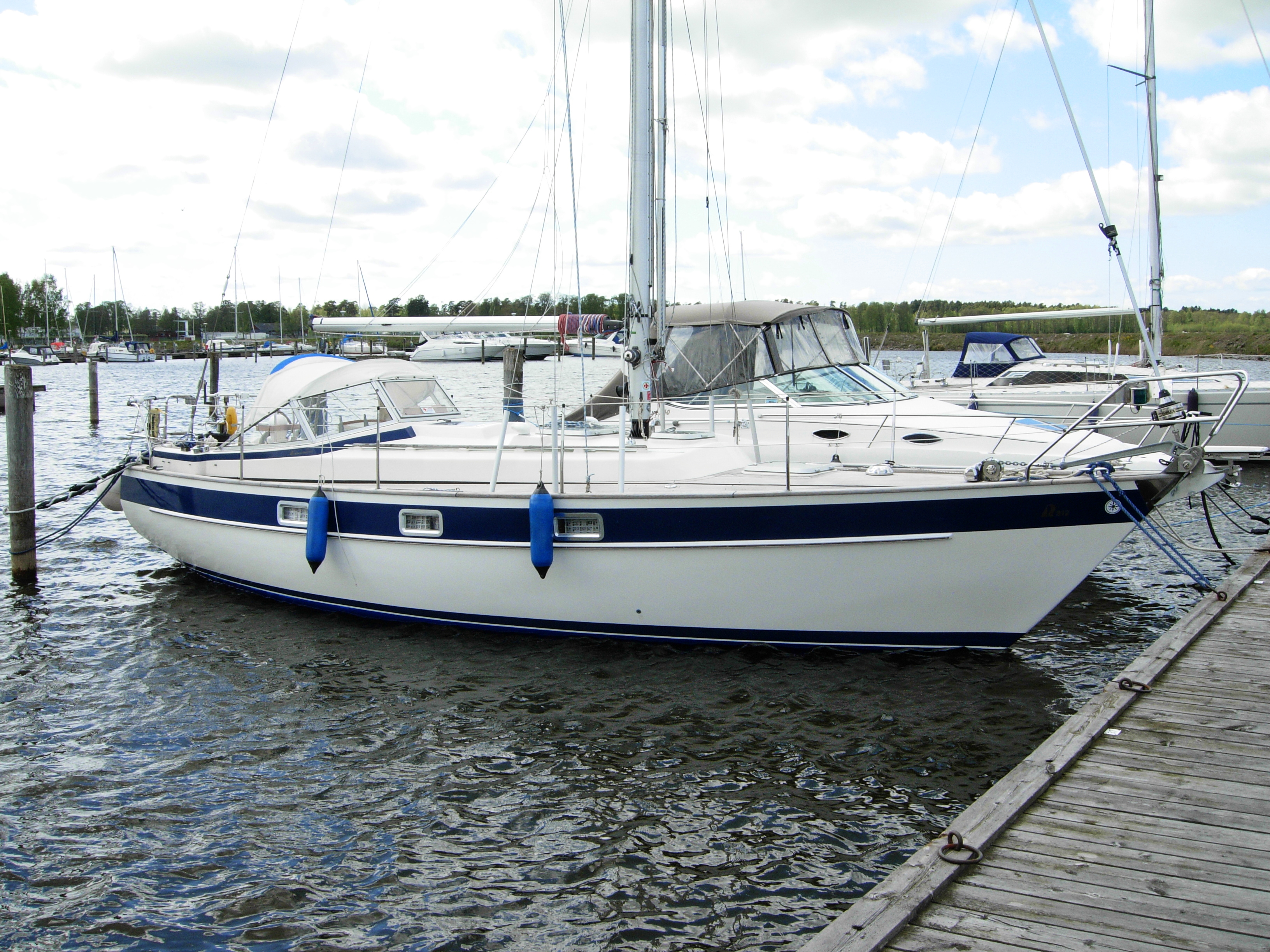
The HR 312 is one of Northern Europe's most recognisable production sailboats. Designed by Olle Enderlein for Hallberg-Rassy and built from 1979 to 1993 — successor to the Monsun 31 and predecessor to the Frers-era HR 34. The model suits couples and small crews cruising the Baltic, Skagerrak, and North Sea.
The HR 312 carries the Enderlein hallmarks buyers expect from the brand: encapsulated iron ballast, teak cockpit coamings, high freeboard, and a solid GRP layup aimed at North Sea work. At 9.6 m LOA it slots between the cult Monsun 31 and the later HR 34 — a sweet spot for couples who want HR build quality without the price premium of larger blue-water models.
Nordic buyers should compare asking price against documented rigging, saildrive, and keel work — cosmetic refreshes rarely replace deferred structural maintenance. Expect 66,000–172,000 kr annual baseline in Swedish marinas with realistic technical reserves.
FairHelm tracks HR 312 listings because these hulls trade constantly on Blocket, Scanboat, and German brokerage sites. Buyers are rarely choosing between "good" and "bad" boats — they are choosing between documented maintenance and deferred work. A polished teak cockpit or new plotter does not cancel unknown rigging age, keel-bolt corrosion, or moisture at chainplates. That is why survey discipline matters more here than brand romance.
For Nordic ownership, HR 312 works as a coastal weekender with occasional longer passages when equipped for cold-water sailing: reliable heating, solid ground tackle, and a realistic technical reserve beyond berth and insurance. Compare adjacent models in FairHelm's model guides and read survey notes before committing a deposit. The cheapest asking price on Blocket is rarely the cheapest boat to own over three seasons.
When you shortlist an HR 312, build a simple survey scorecard: hull moisture, rigging age, drivetrain service, and chainplate integrity. Owner forums and yard quotes from Stockholm, Gothenburg, and Helsingør help you separate cosmetic refresh from structural deferral — especially on boats marketed as "ready to sail" without invoices.
At a glance
Quick facts
- Production
- 1979-1993
- LOA
- 9.42 m
- Beam
- 3.08 m
- Model
- HR 312
Offshore rating & survey verdict
- CE Category
- -
- Capsize Screening (CSF)
- 1.83
From the builder plate / sheet when known; not computed from dims.
Traditional ocean screen often cites CSF ≤ 2.0; not a legal rule.
Top 3 survey red flags
- What chainplate leak issues appear on HR 312
- What older through-hull fitting issues appear on HR 312
- What galvanic corrosion in encapsulated keels appears on HR 312
Technical data
- Length overall (LOA)
- 9.42 m
- Beam
- 3.08 m
- L/B
- 3.06
- LWL
- 7.7 m
- Draft
- 1.62 m
- Displacement
- 4,900 kg
- Ballast
- 2,200 kg
- Sail area
- 45 m²
- Designer
- Christoph Rassy / Olle Enderlein
- Production years
- 1979-1993
Embed seaworthiness badge
<iframe src="https://fairhelm.com/en/embed/model/hallberg-rassy/hr312/" title="FairHelm Seaworthiness Badge" width="360" height="280" loading="lazy" style="border:0;border-radius:8px;max-width:100%;" referrerpolicy="no-referrer-when-downgrade"></iframe>
Calculations and ratios
Brochure numbers need matching units. Open a FairHelm formula page for the classical form, rule of thumb, and limits before you compare listings.
Design history
HR 312 emerged when Hallberg-Rassy was scaling Enderlein shapes toward the later Frers collaboration. Olle Enderlein shaped the hull lines and interior volume for predictable manners in Baltic chop and North Sea swell. Production ran from 1979 to 1993; registry and owner-club sources cite approximately 690 completed hulls.
Hallberg-Rassy built the 312 as the yard's bridge between the Monsun 31 and the HR 34 — explaining why well-kept examples command premium asking prices in Stockholm and Oslo marinas compared with mass-market contemporaries of the same LOA.
Mid-production changes were mostly interior trim, engine options, and deck hardware rather than fundamental hull revisions. That means survey condition, winter storage history, and rigging invoices usually matter more than the model year printed on the brochure. When you evaluate an HR 312 on Blocket, treat the maintenance story as part of the specification — not a footnote after the asking price.
Typical problems
Buyer FAQ
- What chainplate leak issues appear on HR 312?
HR chainplate bedding on 312 decks is a known weak point; internal staining near bulkheads is common on Blocket listings.
- What older through-hull fitting issues appear on HR 312?
Original bronze or plastic through-hulls age out; replacement with access work often costs 8,000–22,000 kr per cluster.
- What galvanic corrosion in encapsulated keels appears on HR 312?
Encapsulated iron ballast is protected but stray current and moisture paths at the stub still need survey attention.
- What teak cockpit wear issues appear on HR 312?
Teak coamings look premium but need periodic rebedding; neglected boats show soft core under hardware.
- What diesel access issues appear on HR 312?
Tight engine boxes on early 312s make service history gaps costly; ask for impeller, exhaust elbow, and heat-exchanger invoices.
Annual ownership costs
| Cost item | Low (SEK) | High (SEK) | Notes |
|---|---|---|---|
| Marina berth | 22,000 | 48,000 | 9.6 m class, Stockholm/Gothenburg |
| Insurance | 8,000 | 22,000 | Agreed value and cruising area |
| Haul-out + winter | 12,000 | 28,000 | Yard package varies by region |
| Antifouling + hull care | 6,000 | 16,000 | Materials and labour |
| Engine / drivetrain | 5,000 | 16,000 | Service intervals and saildrive |
| Rigging reserve | 7,000 | 20,000 | Standing rigging age |
| Deck / structural reserve | 6,000 | 22,000 | Bedding, moisture follow-up |
| Total annual | 66,000 | 172,000 | Excludes major refit years |
Annual ownership for HR 312 is predictable when service records are complete. Berth, storage, and insurance dominate fixed costs in Sweden. The largest variables are rigging replacement timing and any survey-led deck or drivetrain work triggered after purchase. Keep a separate technical reserve so routine season costs stay stable — especially on Blocket boats marketed as "ready to sail" without invoices.
Calculators for this boat
Indicative figure for weekend use. The country supplies berth and winter. The insurance line stays the Swedish planning band - not a Danish, German, or Dutch premium. Maintenance stays Swedish too. Not a marina quote.
- Netherlands (annual contract)€3,700 - €6,312
- Sweden (planning bands)€4,950 - €8,550
- Denmark (two harbours, season)€3,771 - €6,191
Antifouling
27.1 m². 7.5 L - 8.1 L. Medium keel, two coats, 8 m²/L as a planning figure. Replace 8 with the tin.
Open the antifouling calculatorWetted surfaceSail planAll calculators
Pre-purchase survey checklist
Pre-Purchase Inspection Checklist: HR 312
Hull, Keel and Underwater Body
- Moisture-map the underwater hull; document osmosis or barrier-coat history on HR 312 GRP of this era.
- Inspect keel-to-hull joint, keel bolts (if external iron), and backing structure for movement or recurring fairing cracks.
- Check rudder bearings and steering linkage under load during sea trial.
Deck and Hardware
- Test bedding at stanchions, tracks, and winches; open nearby interior access if damp stains appear.
- Inspect hatches and portlights for seal compression and core moisture at corners.
- Verify chainplate areas internally for rust staining or soft laminate.
Rig and Sail Systems
- Confirm standing rigging age with invoices; treat unknown age as near-term replacement on club-used hulls.
- Inspect mast step, spreaders, and terminals for corrosion or fatigue marks.
- Operate furling and reefing systems under realistic load.
Machinery and Systems
- Review engine and saildrive service including cooling, exhaust elbow, and mounts.
- Audit batteries, charging, and owner-added electrical work for safe fusing.
- Check tanks, bilges, and hoses for age-related seepage.