
Beneteau
Oceanis 38
We reply within 2-3 days.
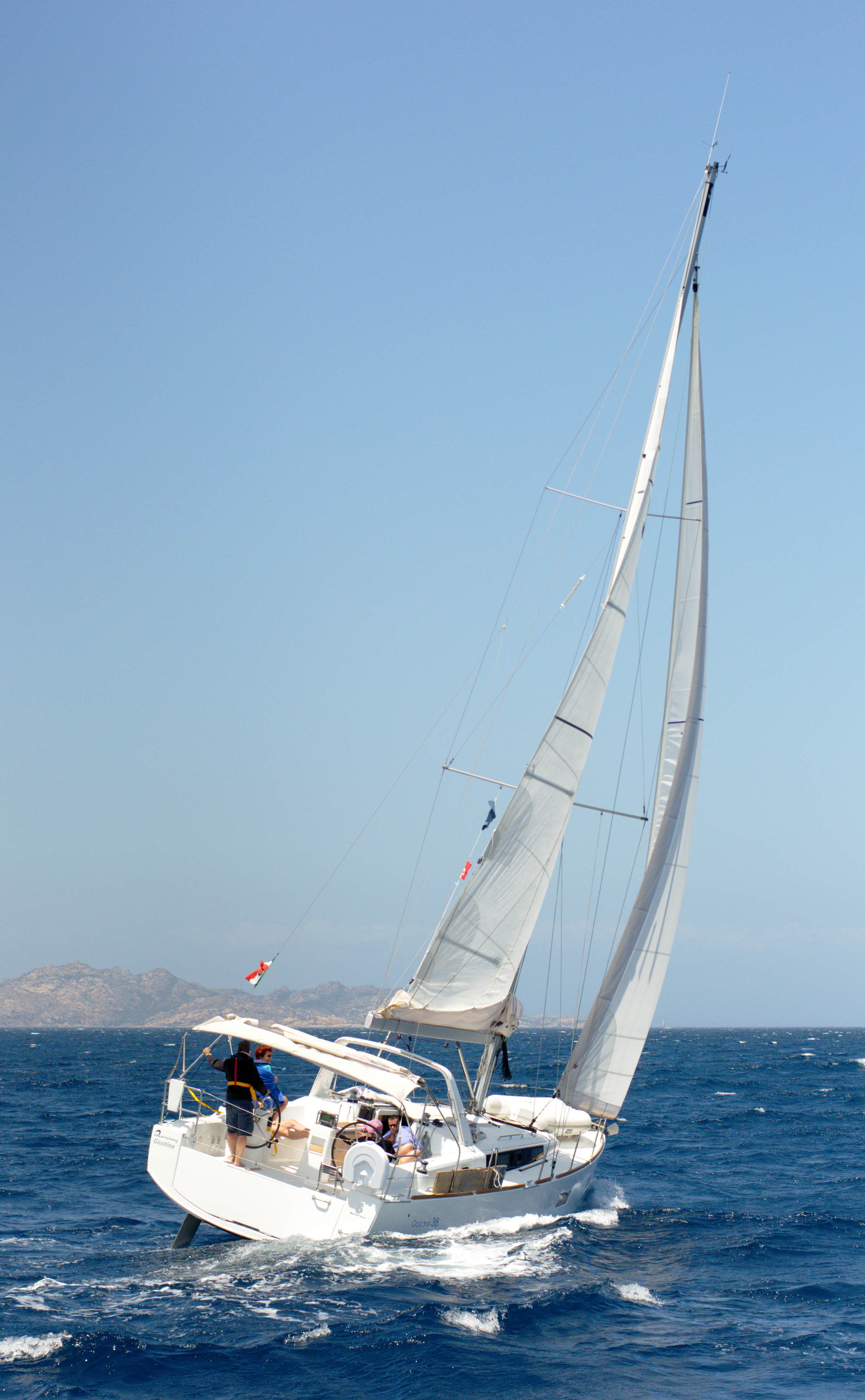
On the live Oceanis 38 card the overview calls the boat one of the most recognizable production yachts of Northern Europe: "Scandinavian yards", years 2014-2017, about 280-730 hulls, length 11.5 m, beam 3.99 m, displacement about 5 980 kg. It is a French Beneteau, drawn by Finot-Conq, not a Scandinavian yard. While the overview keeps the northern template and a weight that is not on the deep sheet (~6 850 kg, LWL 10.72 m), you are not yet looking at a consistent Oceanis 38 and you can easily mix it with the 38.1 update.
The model is a fractional sloop with a fin-and-bulb keel and twin rudders. Sheets: LOA 11.50 m, LWL 10.72 m, beam 3.99 m, deep draft about 2.08 m (shallow about 1.64 m), deep displacement about 6 850 kg, ballast about 1 790 kg. A lifting/centerboard option exists. Below, the 38 had three layout packs: Daysailer, Weekender, Cruiser (Daysailer lighter and slightly shorter overall). Sources start in 2013; the marketed model year is often 2014; the 38 line ends around 2016/2017, then the Oceanis 38.1. Live hull count 280-730 is not taken as SSOT. We do not invent an asking price here.
The 38.1 is an update of the same family, not a different hull length: Murray notes the removable forward bulkhead giving way to a fixed bulkhead with two doors, plus an optional L-galley. Brochures credit interiors to Nauta. Neighbor Oceanis 37 and 40 pages are not reviewed in this journal.
At a glance
Quick facts
- Production
- 2014-2017
- LOA
- 11.5 m
- Beam
- 3.99 m
- Model
- Oceanis 38
Key takeaways
- Best for: family cruising seeking maximum cockpit and salon space
- Common issue: twin wheel linkage tension and gelcoat cosmetic aging
- Typical price: high liquidity, popular in both private and charter use
Offshore rating & survey verdict
Top 3 survey red flags
- Live overview **Scandinavian / 5 980 kg / 280-730** closes against the French Finot-Conq sheet, LWL 10.72, deep ~6 850...
Technical data
- Length overall (LOA)
- 11.5 m
- Beam
- 3.99 m
- L/B
- 2.88
- Production years
- 2014-2017
Calculations and ratios
Brochure numbers need matching units. Open a FairHelm formula page for the classical form, rule of thumb, and limits before you compare listings.
Design history
On survey, look at keel bolts and the joint, moisture at chainplates and the forestay, standing-rigging age from invoices, saildrive service - the live hull/deck checklist is already close.
Typical problems
Live overview Scandinavian / 5 980 kg / 280-730 closes against the French Finot-Conq sheet, LWL 10.72, deep ~6 850 kg, and the 38 / 38.1 fork.
Annual ownership costs
Annual cost bands in kronor read as a berth class around 11.5 m, not a yard quote. We do not invent an asking price here.
Calculators for this boat
Indicative figure for weekend use. The country supplies berth and winter. The insurance line stays the Swedish planning band - not a Danish, German, or Dutch premium. Maintenance stays Swedish too. Not a marina quote.
- Netherlands (annual contract)€4,480 - €7,571
- Sweden (planning bands)€6,000 - €10,300
- Denmark (two harbours, season)€4,590 - €7,497
Antifouling
Litres need waterline length and draft. This page only has length overall and beam, so litres are not calculated here.
Open the antifouling calculatorWetted surfaceSail planAll calculators
Pre-purchase survey checklist
Neighbors Oceanis 37 and 40 are not cloned here: first fix the overview to the French 38 sheet and separate 38.1.
Expert verdict
FairHelm rating: 7.6/10: Innovative volume leader in class; check for steering linkage play and cockpit arch integrity.
Vadim Nareyko, FairHelm Editorial, Last reviewed: 2026-07-12