Beneteau
Oceanis 323
We reply within 2-3 days.
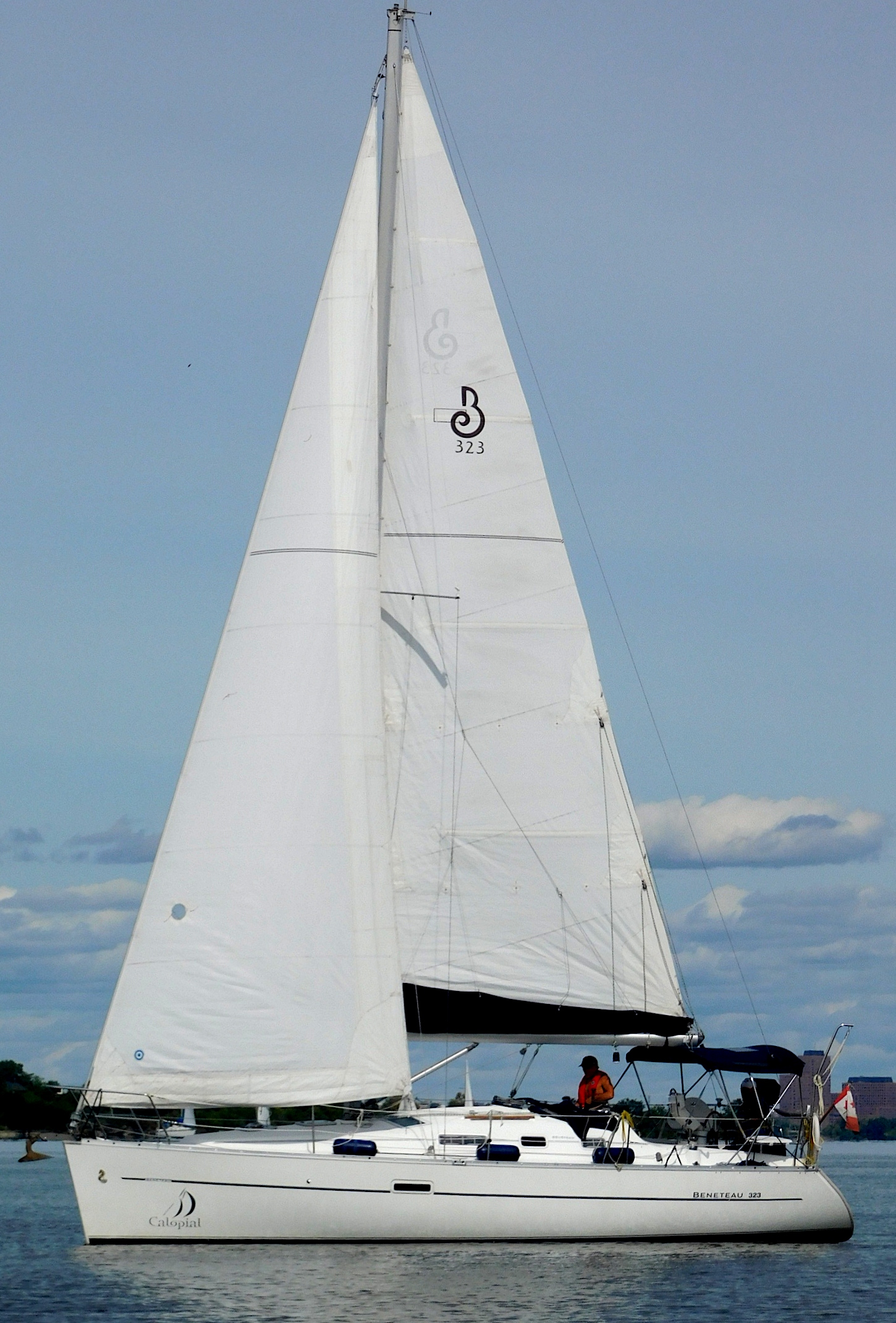
The Beneteau Oceanis 323 is one of Northern Europe's most recognisable production cruisers. Designed by Finot-Conq for Beneteau and built from 2003 to 2008, an estimated 500+ hulls left the Beneteau yard — a popular ten-metre entry to the Oceanis line with steady Baltic resale. The model suits couples and small families cruising the Baltic, Skagerrak, and North Sea.
The Oceanis 323 brought Finot-Conq lines to Beneteau's accessible cruiser range — fractional rig, workable interior, and production scale that keeps Mediterranean and Baltic comparables active. Buyers want simple systems and documented maintenance rather than race inventories.
Listings reflect ex-charter vs private use, Yanmar auxiliary hours, and whether teak options were maintained. French-built boats imported to Scandinavia need extra attention to winter storage history. Expect 70,000–180,000 kr annual baseline in Nordic marinas with realistic technical reserves.
FairHelm tracks Oceanis 323 listings because these hulls trade constantly on Blocket, Scanboat, and German brokerage sites. Buyers are rarely choosing between "good" and "bad" boats — they are choosing between documented maintenance and deferred work. A polished teak cockpit or new plotter does not cancel unknown rigging age, keel-bolt corrosion, or moisture at chainplates. That is why survey discipline matters more here than brand romance.
For Nordic ownership, Oceanis 323 works as a coastal weekender with occasional longer passages when equipped for cold-water sailing: reliable heating, solid ground tackle, and a realistic technical reserve beyond berth and insurance. Compare adjacent models in FairHelm's model guides and read survey notes before committing a deposit. The cheapest asking price on Blocket is rarely the cheapest boat to own over three seasons.
When you shortlist an Oceanis 323, build a simple survey scorecard: hull moisture, rigging age, drivetrain service, and chainplate integrity. Owner forums and yard quotes from Stockholm, Gothenburg, and Helsingør help you separate cosmetic refresh from structural deferral — especially on boats marketed as "ready to sail" without invoices.
At a glance
Quick facts
- Production
- 2003-2008
- LOA
- 10 m
- Beam
- 3.4 m
- Model
- Oceanis 323
Key takeaways
- Best for: mid-size French production with strong marina presence
- Common issue: stanchion leaks and autopilot wear on charter exits
- Typical price: cross-shopped with Oceanis 351 - verify model plaque
Offshore rating & survey verdict
Top 3 survey red flags
- What chainplate and deck leak issues appear on Oceanis 323
- What Yanmar auxiliary service issues appear on Oceanis 323
- What standing rigging age issues appear on Oceanis 323
Technical data
- Length overall (LOA)
- 10 m
- Beam
- 3.4 m
- L/B
- 2.94
- Production years
- 2003-2008
Calculations and ratios
Brochure numbers need matching units. Open a FairHelm formula page for the classical form, rule of thumb, and limits before you compare listings.
Design history
Beneteau introduced the Oceanis 323 in 2003 as a gateway model in the refreshed Oceanis line — Finot-Conq hull lines, fractional rigging, and production scale aimed at family buyers and charter operators across Northern Europe and the Mediterranean. At about 10 m LOA and 3.4 m beam, the model offered accessible coastal cruising with strong brokerage turnover. Production ran from 2003 to 2008; registry and owner-club sources suggest approximately 500+ completed hulls.
Beneteau positioned the Oceanis 323 for coastal and short offshore use in the 2003–2008 production window — a role it still plays on second-hand markets today.
Mid-production changes were mostly interior trim, engine options, and deck hardware rather than fundamental hull revisions. That means survey condition, winter storage history, and rigging invoices usually matter more than the model year printed on the brochure. When you evaluate an Oceanis 323 on Blocket, treat the maintenance story as part of the specification — not a footnote after the asking price.
Typical problems
Buyer FAQ
- What chainplate and deck leak issues appear on Oceanis 323?
Beneteau deck hardware bedding fails on high-season boats — budget rebedding at stanchions and tracks.
- What Yanmar auxiliary service issues appear on Oceanis 323?
Impeller and exhaust elbow documentation is essential before Baltic purchase.
- What standing rigging age issues appear on Oceanis 323?
Unknown rigging age should be priced as near-term replacement on 15+ year hulls.
- What teak option maintenance issues appear on Oceanis 323?
Teak decks on charter boats need rebedding budgets before cosmetic refresh.
- What bilge hygiene issues appear on Oceanis 323?
Poor bilge maintenance hides water ingress paths — survey thoroughly before deposit.
Annual ownership costs
| Cost item | Low (SEK) | High (SEK) | Notes |
|---|---|---|---|
| Marina berth | 22,000 | 48,000 | 10 m class, Stockholm/Gothenburg |
| Insurance | 8,000 | 22,000 | Agreed value and cruising area |
| Haul-out + winter | 12,000 | 28,000 | Yard package varies by region |
| Antifouling + hull care | 6,000 | 16,000 | Materials and labour |
| Engine / drivetrain | 5,000 | 16,000 | Service intervals and saildrive |
| Rigging reserve | 7,000 | 20,000 | Standing rigging age |
| Deck / structural reserve | 6,000 | 22,000 | Bedding, moisture follow-up |
| Total annual | 66,000 | 172,000 | Excludes major refit years |
Annual ownership for Oceanis 323 is predictable when service records are complete. Berth, storage, and insurance dominate fixed costs in Sweden. The largest variables are rigging replacement timing and any survey-led deck or drivetrain work triggered after purchase. Keep a separate technical reserve so routine season costs stay stable — especially on Blocket boats marketed as "ready to sail" without invoices.
Calculators for this boat
Indicative figure for weekend use. The country supplies berth and winter. The insurance line stays the Swedish planning band - not a Danish, German, or Dutch premium. Maintenance stays Swedish too. Not a marina quote.
- Netherlands (annual contract)€4,480 - €7,571
- Sweden (planning bands)€6,000 - €10,300
- Denmark (two harbours, season)€4,590 - €7,497
Antifouling
Litres need waterline length and draft. This page only has length overall and beam, so litres are not calculated here.
Open the antifouling calculatorWetted surfaceSail planAll calculators
Pre-purchase survey checklist
Pre-Purchase Inspection Checklist: Beneteau Oceanis 323
Hull, Keel and Underwater Body
- Moisture-map the underwater hull; document osmosis or barrier-coat history on Oceanis 323 GRP of this era.
- Inspect keel-to-hull joint, keel bolts (if external iron), and backing structure for movement or recurring fairing cracks.
- Check rudder bearings and steering linkage under load during sea trial.
Deck and Hardware
- Test bedding at stanchions, tracks, and winches; open nearby interior access if damp stains appear.
- Inspect hatches and portlights for seal compression and core moisture at corners.
- Verify chainplate areas internally for rust staining or soft laminate.
Rig and Sail Systems
- Confirm standing rigging age with invoices; treat unknown age as near-term replacement on charter-history hulls.
- Inspect mast step, spreaders, and terminals for corrosion or fatigue marks.
- Operate furling and reefing systems under realistic load.
Machinery and Systems
- Review engine and saildrive service including cooling, exhaust elbow, and mounts.
- Audit batteries, charging, and owner-added electrical work for safe fusing.
- Check tanks, bilges, and hoses for age-related seepage; inspect bilge hygiene for hidden water paths.
Expert verdict
FairHelm rating: 7.5/10: Mid-size Beneteau production with marina liquidity; inspect deck leaks and charter-exit rigging wear.
Vadim Nareyko, FairHelm Editorial, Last reviewed: 2026-07-12